
Radiation Transport Calculation
- Multi-particles: neutron, photon, electron, proton, heavy ion, etc.
- Sensitivity and uncertainty analysis, large perturbation analysis, calculation suspension and resumption, etc.
FDS Consortium · 凤麟核
Multi-Functional Program for Neutronics Calculation, Nuclear Design and Safety Evaluation
A large-scale nuclear design software developed for more than 30 years, taking radiation transport calculation as the core.
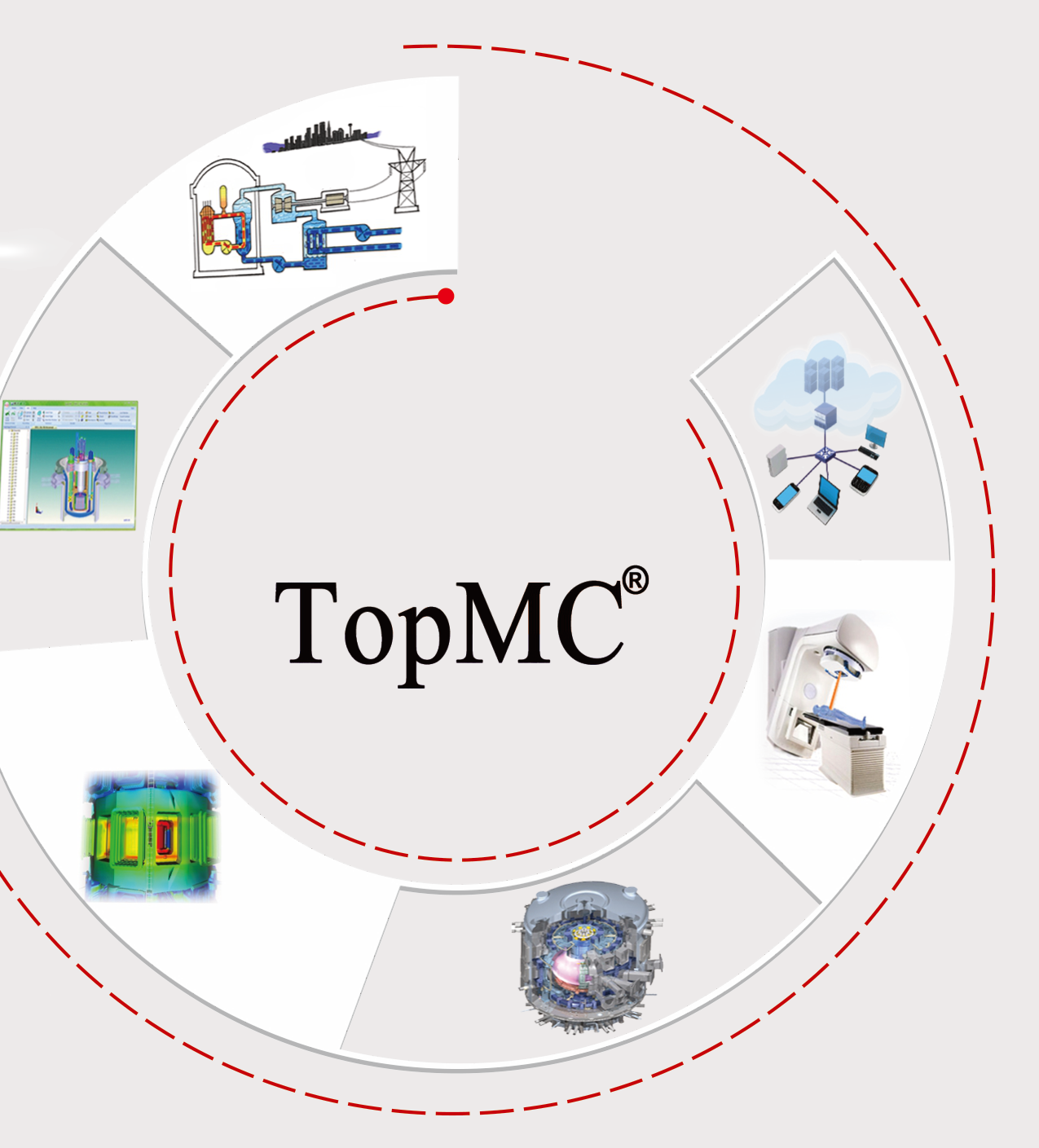
Multi-Functional Program for Neutronics Calculation, Nuclear Design and Safety Evaluation (TopMC, updated and extended version of SuperMC) is a large-scale nuclear design software, which has been developing by FDS Consortium for more than 30 years. Taking radiation transport calculation as the core, TopMC supports the whole process neutronics calculation containing depletion, radiation source term/dose/biohazard, material activation and transmutation.
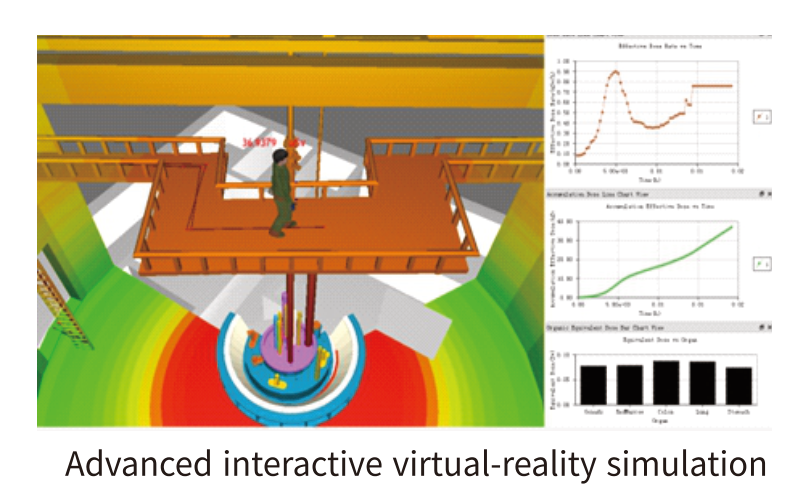
It is featured with high efficiency and high fidelity multi-physics calculation, accurate modeling, visualized analysis and virtual simulation and intelligent nuclear design and safety evaluation. TopMC can be used for the design and safety evaluation of nuclear energy systems, as well as nuclear technology application fields.
TopMC has been widely used in more than 1000 well-known nuclear-related institutions in energy, healthcare, industry, in more than 90 countries. Related methodologies and technologies have won the National Natural Science Award, the European Prize for Innovation in Fusion Research, etc.
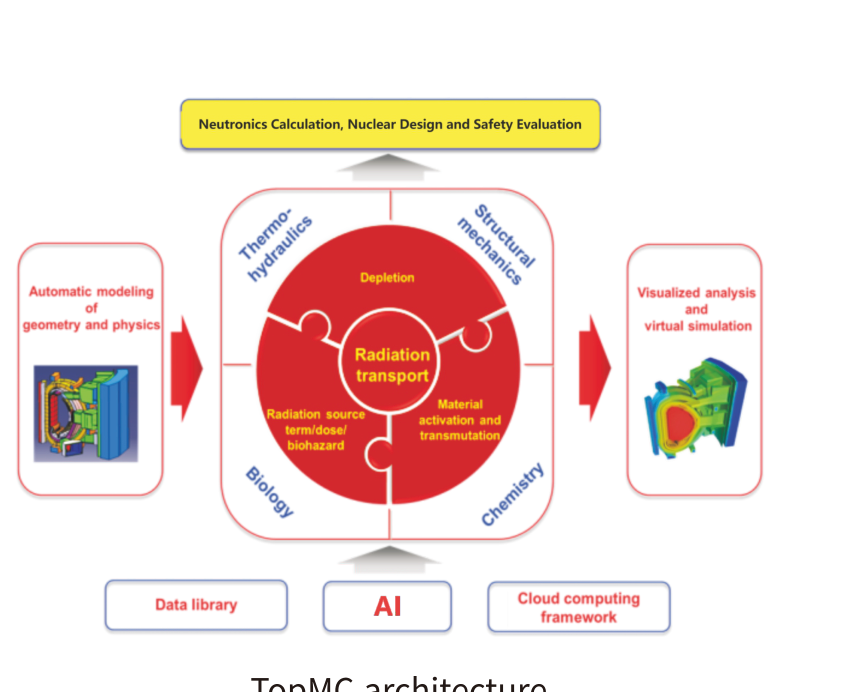
From multi-particle transport to shutdown dose rate and accident evolvement, covering the full neutronics workflow of a nuclear system.
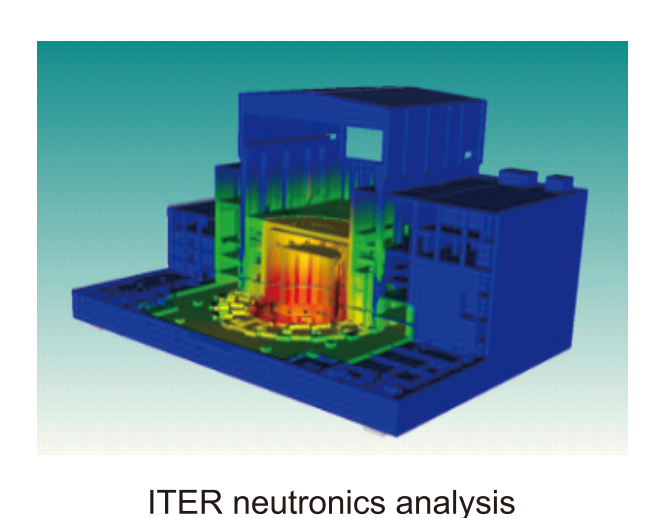
Applied in International Thermonuclear Experimental Reactor (ITER) design for over 10 years, supported to establish ITER reference neutronics basic models.
Selected as the reference software for nuclear design and safety evaluation of China Lead-based Reactor (CLEAR), supported the compact design of CLEAR; applied in the radiation shielding assessments of HPR1000 and passed the Generic Design Assessment (GDA).
Support the quantitative analysis of the impact of detector structure, the optimization of detection efficiency, etc.
Support the system design, the optimization of beam quality, radiation protection, etc.
Support the optimized design and plan formulation.
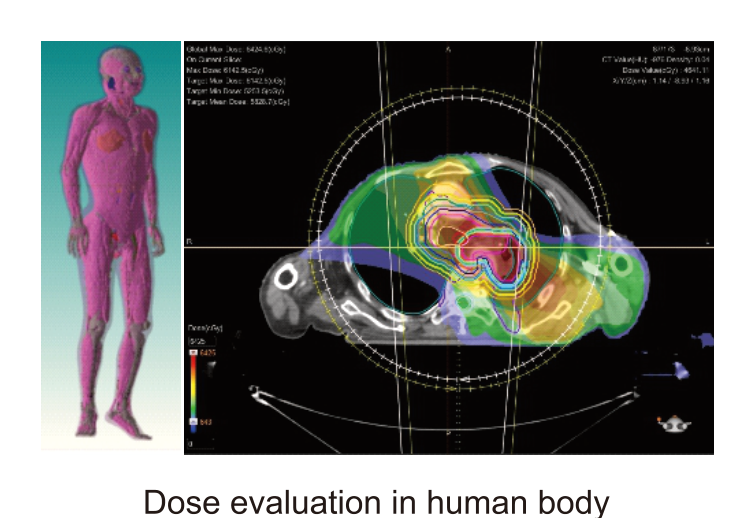
Support the accurate dose evaluation of photon/electron/neutron radiation in human body.
Support the design of the detector, shielding, interpretation system, etc.
Support the dose simulation to optimize/evaluate the irradiation plans.
FDS, the consortium for nuclear technology innovation in China, focuses on R&D of advanced nuclear systems and applications of nuclear technology. Its history can be traced back to the 1980s. In addition to fundamental research on neutron science and technology, FDS conducts applied research in the fields of Nuclear Informatics and Software Applications, Neutron Detection and Applications, Advanced Nuclear Energy and Safety, and Radiation Medicine and Applications.
FDS Consortium has over 800 employees with 80% of its R&D members holding doctoral degrees. It has registered more than 20 subsidiary independent legal entities and established five R&D bases located in Chongqing, Qingdao, Nanjing, Hefei and Anqing. It has undertaken more than 200 domestic and international projects, including ITER related projects and collaborations with IAEA and IEA.

Tell us who you are and what you are working on — our technical team will reply by email.